
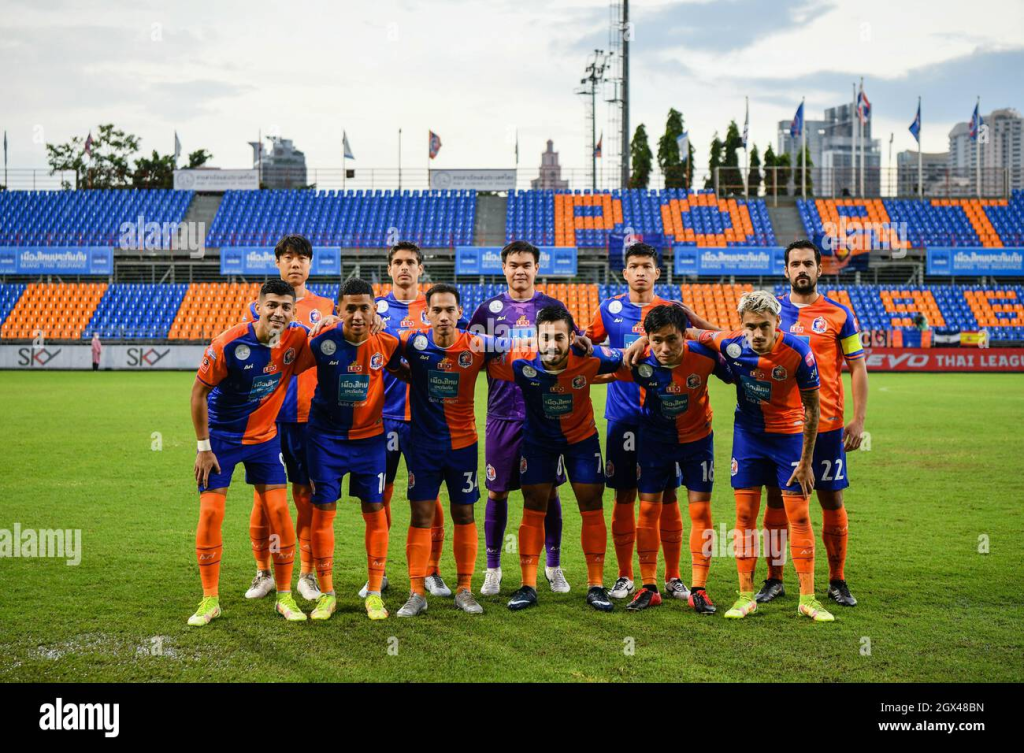
Betting odds in the Thai League are not formed purely from statistical models; they are constantly adjusted by how fans think, react, and place money. The 2023/24 season highlights a recurring pattern where emotional bias, club popularity, and narrative momentum directly influence pricing. Understanding this interaction reveals why odds sometimes drift away from actual team performance.
Why fan sentiment directly affects odds formation
Odds reflect probability, but they also respond to money flow. When large groups of fans consistently back certain teams, bookmakers adjust prices to balance exposure rather than reflect pure performance metrics. This creates a feedback loop where perception influences odds, and odds reinforce perception.
The Thai League amplifies this effect due to strong regional loyalty. Clubs with large fan bases attract disproportionate betting volume, pushing odds in directions that may not align with underlying performance indicators.
How popularity distorts fair pricing
Teams with high visibility often carry inflated expectations regardless of recent results. This leads to shorter odds than their actual probability justifies, especially in home matches or high-profile fixtures.
The distortion becomes clearer when comparing similarly performing teams with different fan bases. A mid-table team with a strong following may be priced as a favorite, while a statistically equal opponent is undervalued due to lower public interest.
- Big clubs attract consistent backing even during poor form.
- Media narratives reinforce confidence in well-known teams.
- Casual bettors rely on familiarity instead of data.
- Emotional attachment overrides recent performance trends.
- Odds shift pre-match due to volume, not analytical correction.
These patterns show that popularity acts as a pricing force independent of performance. The more attention a team receives, the more likely its odds will reflect expectation rather than reality. For disciplined analysis, this creates situations where less popular teams offer better value despite similar or stronger underlying metrics.
Emotional betting and momentum bias
Fan psychology often reacts to recent outcomes more strongly than long-term trends. A team winning two or three matches in a row is quickly perceived as “in form,” even if those wins came from low-quality performances.
Short-term streak effects
- Winning streaks inflate confidence beyond statistical justification.
- Losing streaks exaggerate perceived weakness.
- Late goals create false impressions of dominance.
- High-scoring matches skew expectations of attacking strength.
This mechanism leads to exaggerated price movements. A short run of results can significantly shift odds, even when underlying performance metrics remain stable. As a result, bettors who rely on emotional momentum often reinforce mispricing instead of correcting it.
When crowd behavior creates exploitable gaps
The gap between perception and performance becomes most visible when public sentiment moves faster than reality. In these moments, odds reflect collective belief rather than measurable output.
Observation reveals that when a heavily supported team underperforms but continues to receive betting volume, pricing rarely adjusts downward as quickly as it should. In that environment, a betting interface such as เวปufa168 often displays odds that still favor the popular side, even when data suggests a more balanced probability. This mismatch creates opportunities for those willing to challenge consensus thinking.
The role of local narratives and media framing
Local media coverage influences how fans interpret matches, often emphasizing dramatic storylines over tactical analysis. This shapes expectations before odds even begin to move.
For example, a comeback victory may be framed as resilience rather than defensive weakness, leading fans to overestimate a team’s strength. These narratives persist across multiple matches, reinforcing biased betting behavior and delaying market correction.
Comparing perception vs performance indicators
To understand how far odds deviate from reality, it is necessary to compare fan-driven perception with measurable indicators. This contrast highlights where psychological influence outweighs data.
Metric | Fan Interpretation | Data Reality | Impact on Odds
Recent wins | Strong form | May include luck | Odds shorten excessively
Goal scoring | Attacking power | Could be low-quality chances | Overvaluation
Big-name players | Match winners | Inconsistent contribution | Inflated expectations
Home advantage | Guaranteed edge | Varies by opponent | Overpriced favorites
This comparison shows that perception tends to simplify complex performance into easily digestible narratives. Odds influenced by these narratives often fail to capture deeper variables, leading to inefficiencies that persist longer than expected.
Cross-market influence and behavioral spillover
Fan psychology does not stay confined to match odds; it spreads across different betting markets. When confidence builds around a team, it affects goal lines, handicap pricing, and even unrelated betting categories.
In situations where emotional betting extends beyond football, a casino online website often reflects similar behavioral patterns. Users who experience short-term success in sports betting may carry increased risk tolerance into other areas, reinforcing impulsive decision-making. This crossover effect shows that psychology operates consistently across different forms of wagering.
Limits of psychology-based analysis
While fan behavior explains many pricing inefficiencies, it does not guarantee predictable outcomes. Markets eventually adjust, and sharp bettors counterbalance emotional money over time.
In some cases, strong fan support aligns with genuine performance improvements, making odds appear biased when they are actually justified. Misreading these situations leads to false assumptions about value, especially when relying solely on contrarian thinking without supporting data.
Summary
Fan psychology plays a decisive role in shaping Thai League betting odds during the 2023/24 season. Popularity, emotional momentum, and media narratives influence how money flows into the market, often distorting prices away from true performance levels. These distortions create temporary inefficiencies, but they require careful interpretation to distinguish between genuine value and misleading signals.