
The number of Android rummy apps available online has grown considerably over the past few years. For users, this creates more choice, but it also makes it harder to tell which application is actually worth installing.
Two apps may look similar in search results while offering different game modes, Android requirements, interfaces, update schedules, and account systems. That is why comparing a few basic details before downloading an APK can save time and reduce unnecessary installations.
Here are some of the most useful things Android users should look at when comparing rummy applications in 2026.
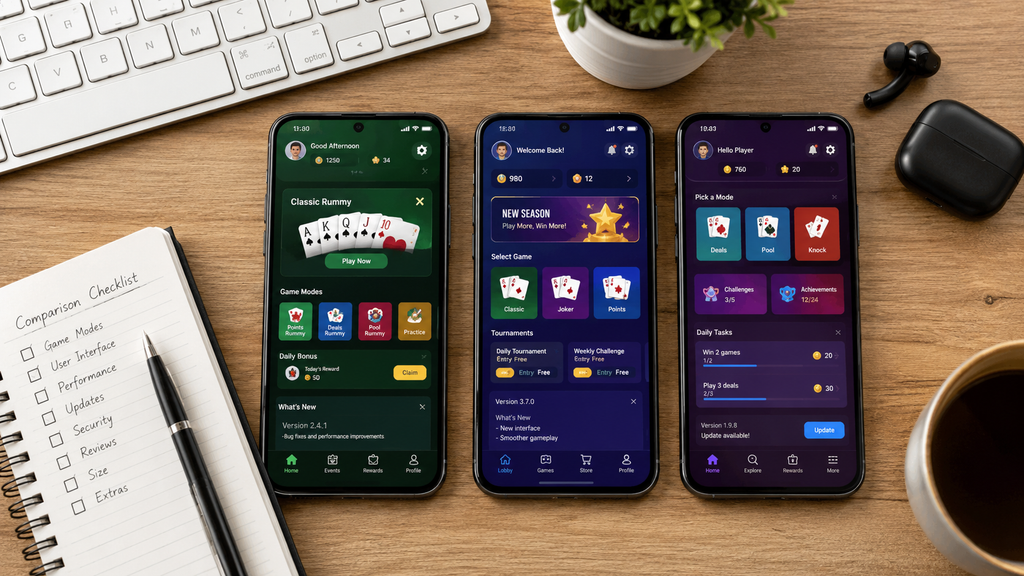
1. Check What the App Actually Offers
The first step is surprisingly simple: understand what kind of application you are looking at.
Some platforms are mainly focused on traditional 13-card rummy, while others combine rummy with casual games, slots-style games, or other card formats.
Before installing an app, check whether its description clearly explains:
- Available game formats
- Main features
- Android requirements
- Registration process
- Current app version
- Support options
Users who are still comparing different platforms can use a broader rummy apps directory to see multiple applications in one place rather than searching for each app separately.
This is especially useful when several apps have similar names or interfaces.
2. Compare the Available Rummy Formats
Not every rummy application offers the same game modes.
The most common formats found on Indian rummy platforms include:
Points Rummy
Points Rummy is generally designed around shorter individual rounds. Each game ends when a player makes a valid declaration.
Pool Rummy
Pool Rummy usually continues across several rounds until players reach a predefined score limit.
Deals Rummy
Deals Rummy uses a fixed number of deals and calculates the result after those deals are completed.
Users should not assume that every application supports all three formats.
If you prefer a particular style of play, checking the available modes before installation is much easier than downloading an app and discovering later that the format you wanted is missing.
3. Look at the Android Version Requirements
Android compatibility is one of the most overlooked parts of APK installation.
An application may work normally on a recent Android phone but fail to install on an older device.
Compatibility can depend on:
- Android operating system version
- Available storage space
- Device architecture
- Security settings
- APK version
- Manufacturer-specific restrictions
For example, Samsung, Xiaomi, Oppo, Vivo and OnePlus phones may display slightly different installation menus even when they are running similar Android versions.
Users should therefore check the minimum Android requirement wherever that information is available.
4. Check the Current APK Version
The version number can tell you whether the file being offered is relatively recent or potentially outdated.
Useful information on an app page normally includes:
- APK version
- File size
- Last update date
- Android requirement
- Installation instructions
This does not mean users should automatically choose whichever app has the highest version number. Different developers use different numbering systems.
Instead, version information should be used to confirm that the APK you are viewing matches the current information provided for that particular application.
5. Compare Individual Apps, Not Just App Lists
Large application directories are useful for discovery, but once you find an app that interests you, it is worth opening its individual information page.
A dedicated app page should provide more detail than a simple listing.
For example, someone researching Hi Rummy should ideally check its current Android version, installation method, main game options and app-specific information rather than relying only on a short name shown in a directory.
This second step is important because individual apps may change independently.
An app that looked similar to another platform several months ago may have received a new interface or Android build since then.
6. Review the Installation Instructions
Most Android APK files follow a similar installation process:
- Download the APK file.
- Open the downloaded file.
- Allow installation from the relevant source if Android requests permission.
- Complete the installation.
- Open the application.
The exact wording can vary between Android versions.
On newer phones, Android normally asks for permission for the specific browser or file manager attempting to install the APK rather than enabling installation from unknown sources globally.
Users should be cautious about guides that tell them to disable several unrelated Android security settings just to install one application.
7. Pay Attention to App Permissions
Permissions can provide useful clues about how an application interacts with your phone.
Depending on the app, requests may include:
- Internet access
- Notifications
- Storage access
- Camera access
- Device information
Some requests may have a clear purpose, while others deserve more attention.
For example, online games obviously require network access. Notification permission can also make sense for account or game updates.
But