
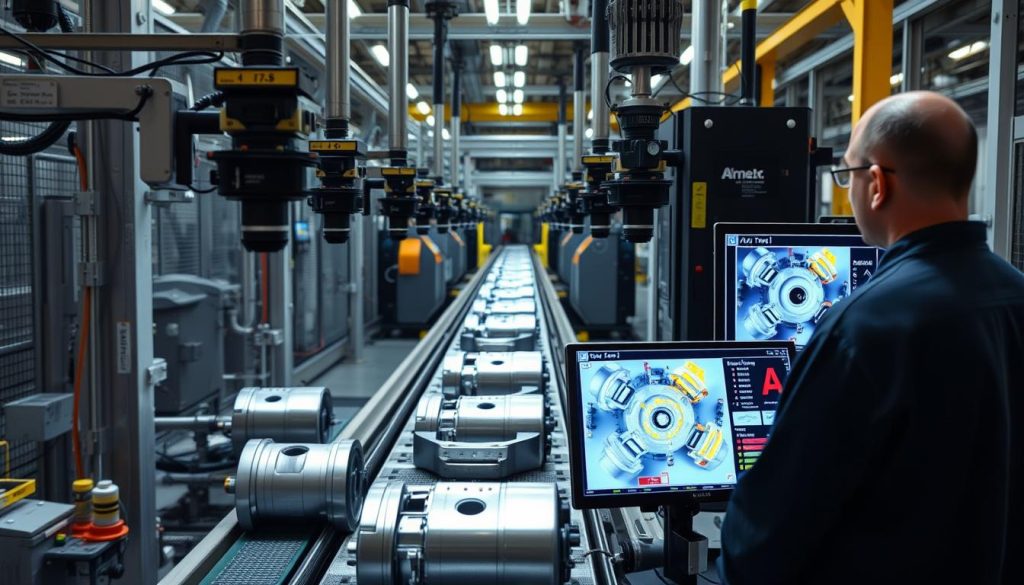
In the competitive global marketplace, quality control transcends operational efficiency; it is the fundamental engine of financial resilience and legal compliance. Manufacturing defects, no matter how small, cascade into catastrophic costs, including product recalls, warranty claims, and irreparable brand damage. The only sustainable defense against this pervasive risk is an unwavering commitment to perfection, achievable today only through automated systems. The shift from subjective human checks to AI-powered Visual Inspection is the single most effective risk mitigation strategy available to modern manufacturers. To learn how to transform your quality assurance department from a cost center into a reliable source of compliance and measurable ROI, consult the expert automated solutions provided by Opsio Cloud via our dedicated guide to Visual Inspection.
The decision to adopt Automated Visual Inspection (AVI) is a decision to invest directly in business longevity. It is about creating a quality checkpoint that is tireless, unbiased, and immune to human fatigue. For any organization serious about scaling production while simultaneously adhering to the strictest regulatory standards, partnering with a specialist like Opsio Cloud to implement AVI is essential for controlling liability and guaranteeing product integrity.
Section 1: The High Cost of Quality Failure
The financial and reputational consequences of quality failure are steep, easily dwarfing the investment in automated technology. These costs extend far beyond simple scrap and rework:
- Product Recalls: A single major product recall can cost millions, encompassing investigation fees, logistics, repairs, and legal expenses. Furthermore, it permanently erodes consumer trust and brand equity.
- Warranty and Servicing Costs: Poor quality assurance translates directly into higher rates of in-field product failure, triggering costly warranty replacements and service labor that cut into profit margins long after the sale.
- Regulatory Fines and Legal Exposure: Industries like pharmaceuticals, medical devices, and automotive face severe financial penalties and even criminal charges for non-compliance resulting from documented quality lapses. Manual inspection logs often fail to provide the conclusive, auditable data required to defend against these claims.
By contrast, the ability of modern Visual Inspection systems to ensure 100% inspection acts as an insurance policy, proactively eliminating these massive financial drains.
Section 2: AVI as the Ultimate Risk Mitigation Tool
Automated Visual Inspection systems fundamentally restructure the quality process by eliminating subjectivity and generating irrefutable evidence of quality at the point of manufacture.
A. Eliminating Human Error and Fatigue
Human inspectors, despite their best efforts, have an accuracy rate that degrades significantly after short periods of repetitive tasks. AVI systems, powered by Deep Learning AI, operate with statistical certainty 24/7/365. This eliminates the risk of defects being mistakenly passed during shift changes, breaks, or late-hour fatigue. The machine is always calibrated to the same perfect standard, making quality an engineering constant, not a human variable.
B. Ensuring Regulatory and Audit Traceability
Compliance in highly regulated environments (e.g., ISO, FDA, FAA) requires more than just passing a quality check; it requires an auditable record of the check itself. AVI systems automatically tag and time-stamp every inspected unit.
This data provides:
- Irrefutable Evidence: A detailed log, often including images, proving that a specific part met quality standards at a specific time.
- Targeted Recall Capability: If a quality issue is discovered later, the granular data allows the manufacturer to pinpoint the exact batch or time window affected, dramatically minimizing the scope and cost of any required recall.
This level of automatic traceability is impossible to achieve reliably with manual processes and is crucial for legal defense and maintaining certifications.
Section 3: The Data Dividend: Turning QA into Profit
While risk mitigation prevents losses, the data generated by automated Visual Inspection actively creates profit opportunities by driving operational excellence and reducing resource consumption.
- Scrap Reduction and Resource Efficiency: By catching defects immediately at their source, the AVI system prevents the manufacturer from investing further labor and materials into an already faulty product. This reduction in scrap material and associated energy use is a direct and powerful boost to sustainability goals and the bottom line.
- Optimizing Upstream Processes: The AVI platform doesn’t just register a failure; it registers where the defect occurred (e.g., specific mold cavity, specific injection point). This root cause analysis feedback loop allows process engineers to make precise adjustments to machine settings, reducing the frequency of defects from the source. This is the definition of continuous improvement and process optimization.
- Warranty Prevention: By eliminating the most common failure points before the product leaves the factory, AVI significantly reduces the rate of warranty claims and returns, enhancing customer satisfaction and protecting the reputation of the brand.
Section 4: Strategic Governance and Implementation with Opsio Cloud
The transition to AI-powered Visual Inspection is an intricate process that must integrate into existing production infrastructure while meeting global data governance standards.
Opsio Cloud specializes in delivering this high level of industrial integration and governance:
- Industrial Integration: We bridge the gap between AI models running on high-speed Edge devices and the legacy industrial control systems (PLCs, MES) that manage the production line, ensuring instantaneous pass/fail actions.
- Data Governance and Cloud Platform: We architect the secure cloud backend for centralizing the vast data generated by the cameras, enabling secure remote auditing, performance benchmarking across global facilities, and ensuring data residency requirements are met.
- Model Lifecycle Management: Quality standards evolve. We provide the expertise and tools necessary for continuous model retraining and maintenance, ensuring the AVI system remains accurate as new products, materials, or defect types emerge.
By partnering with Opsio Cloud, businesses ensure their quality control is not a reactive checkpoint, but a proactive system designed for total risk mitigation and continuous financial gain.